
Halloween can be exciting for people, but the evening may feel very different from your dog’s point of view.
There may be repeated doorbells, people in unfamiliar costumes, children calling out and visitors coming and going. Some dogs will take it all in their stride. Others may feel unsettled, overwhelmed or simply prefer a quiet night in.
There’s no need to involve your dog in the celebrations. A little planning can help them feel safe and comfortable.
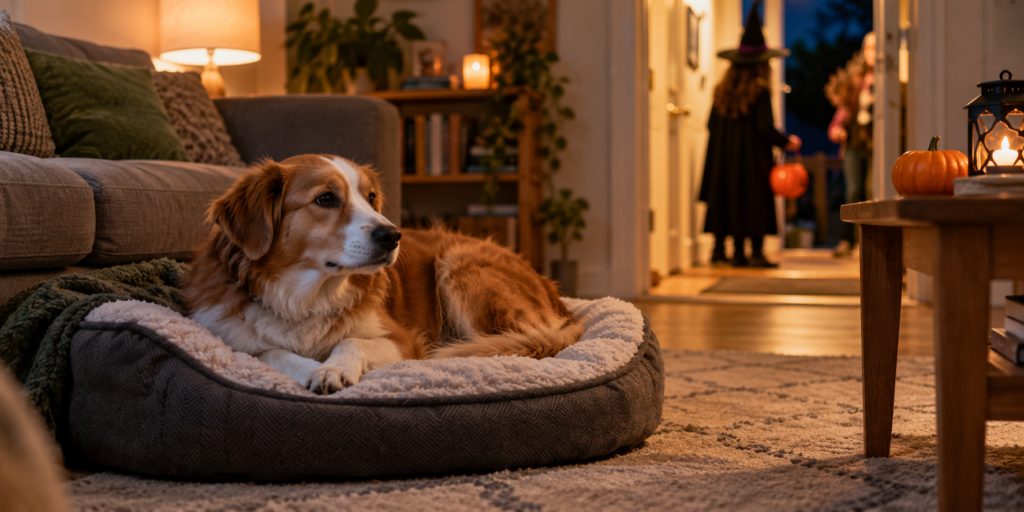
Prepare a quiet place your dog can choose
Set up a comfortable space away from the front door, with their bed, water and familiar things. Offer a chew, toy or enrichment activity if your dog enjoys one.
Make sure your dog can settle there happily. A crate may suit a dog who already enjoys using one, but it shouldn’t be introduced or shut if your dog feels trapped. The aim is to give them somewhere they can choose to relax.
Make a plan for the doorbell
If you have time, you can practise with the doorbell or a gentle knock at a level your dog can manage. Keep it quiet and brief, and pair it with something your dog enjoys. Stop if they seem worried.
On the night, you could turn the doorbell off, put a note on the door asking people not to knock, or leave sweets outside for trick-or-treaters. If you’re answering the door, keep your dog safely away from the entrance so they don’t rush out or feel they have to greet anyone.
Let your dog decide whether to say hello
Please ask visitors to give your dog space. They can avoid staring, reaching out or leaning over your dog, and let your dog choose whether to come closer.
If your dog prefers to stay in their quiet space, that’s absolutely fine. If they seek you out, you can calmly reassure them. Don’t tell them off for barking or growling; these can be signs that they’re worried and need more space.
Keep tempting treats and decorations out of reach
Keep sweets, chocolate and wrappers where your dog can’t reach them. Decorations, cables and candles should also be placed safely out of the way.
A familiar activity in a quiet room may help your dog settle while people are at the door. Choose something they already enjoy, and don’t worry if they aren’t interested.
Watch how your dog is coping
Your dog may show they’re uncomfortable by hiding, pacing, panting, becoming unusually clingy, barking or finding it hard to settle. If you notice this, reduce the noise and activity around them and let them move to a space where they feel safer.
If your dog finds visitors very difficult, speak with your vet or a suitably qualified behaviour professional before the event. A plan tailored to your dog can help everyone feel more comfortable.
Halloween doesn’t have to involve greetings, costumes or trick-or-treating for your dog. A calm evening at home, with choice and space, may be exactly what they need.
Need more help?
Find an independent dog trainer or behaviourist near you using our EDTN search tool.
If fireworks are a concern as well, you may find our fireworks advice helpful.
Further reading
