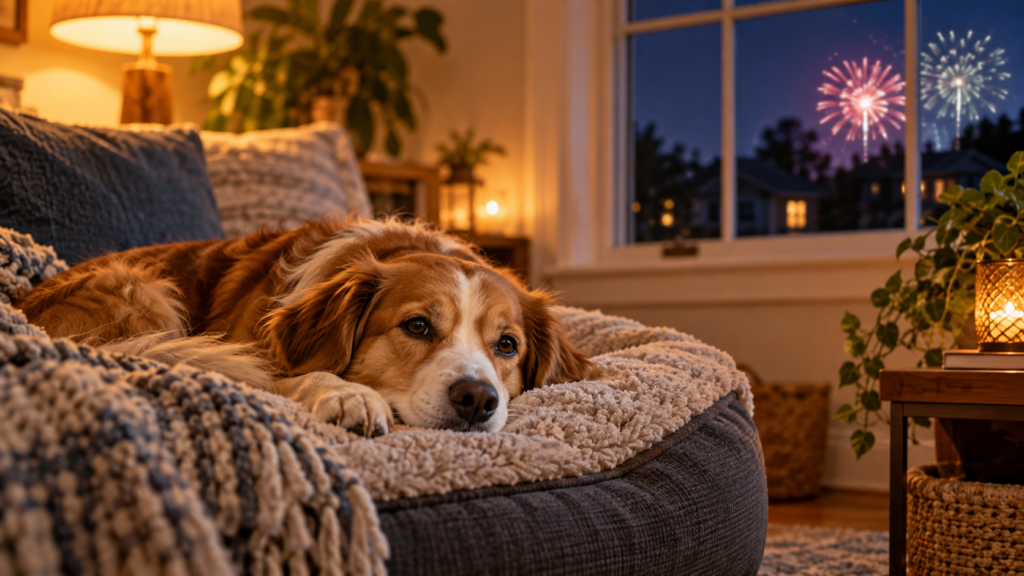
Fireworks season can be incredibly difficult for some dogs. For a dog who is frightened by loud or unpredictable noises, the bangs, flashes and vibrations can feel overwhelming — and once they are frightened, it can be very difficult for them to simply “get used to it”.
The good news is that there are things we can do to make fireworks season easier. And the best time to start is before the fireworks begin.
How do I know if my dog is worried about fireworks?
Fear doesn’t always look dramatic. Some dogs may shake, hide or try to escape, but others show much more subtle signs.
You might notice your dog:
- panting or drooling
- pacing or struggling to settle
- becoming unusually clingy
- hiding
- refusing food
- barking or whining
- trembling
- trying to escape
- appearing very alert or unable to relax
Give your dog somewhere safe to retreat
Create a comfortable area your dog can choose to go to when they feel worried.
This might be a covered crate if they already enjoy their crate, a cosy corner behind the sofa, underneath a table, or simply their favourite bed in a quieter part of the house.
The important part is choice.
Don’t shut your dog into a “safe space” they are trying to leave, and don’t pull them out if they decide to hide. Let them choose where they feel safest.
You can start making that area positive now by leaving comfortable bedding there, offering chews or enrichment and spending calm time nearby.
You CAN comfort a frightened dog
One outdated piece of advice we still hear is:
“Don’t comfort them or you’ll reward the fear.”
Fear is an emotional response, not a behaviour your dog is deliberately performing to earn attention.
If your dog seeks you out, it is absolutely okay to calmly reassure them. Equally, if your dog would rather hide somewhere alone, respect that too.
The most important thing is to respond to the dog in front of you and support them in the way they find most helpful.
Reduce the impact of the fireworks
On evenings when fireworks are likely:
- close windows and curtains before they start
- keep lights on to reduce the contrast of flashes outside
- use familiar music, television or other background sound to soften sudden bangs
- walk your dog earlier in the day so you are safely home before dark
- make sure doors, windows and gardens are secure
And however confident your dog normally seems, don’t take them to a fireworks display.
Don’t force them to “face their fear”
Exposure isn’t the same thing as training.
Playing firework sounds loudly in the hope that your dog will eventually “get used to them” can actually make fear worse.
If you want to work on firework sounds, start at such a low volume that your dog remains completely comfortable. The volume can then be increased very gradually over time.
If your dog starts showing signs of worry, you’ve gone too quickly.
For dogs with a significant existing noise fear, it can be really helpful to work with an appropriately qualified trainer or behaviour professional rather than trying to rush the process before November.
Speak to your vet BEFORE fireworks night
If your dog has previously shown significant fear — shaking, panicking, trying to escape, refusing to go outside or being completely unable to settle — please speak to your vet before firework season is underway.
Your vet can check whether pain or another health problem could be contributing to increased noise sensitivity and discuss whether your dog may benefit from additional support or medication.
Some medications are most effective when given before your dog is already frightened, so please don’t wait until the fireworks have started to ask for help.
Most importantly — listen to the dog in front of you
There isn’t one perfect fireworks routine that suits every dog.
One dog may want to curl up beside you on the sofa.
Another may disappear underneath the bed.
Another might happily settle with a chew or enrichment activity while the television is turned up.
Our job isn’t to decide how they should cope.
It is to notice what helps them feel safer and give them as much choice, predictability and support as possible.
If your dog struggles with fireworks, now is the time to start preparing — not when the first bang goes off.
Need some extra support?
The Ethical Dog Trainers Network can help connect you with an ethical, reward-based dog trainer or behaviourist in your area.
Use our Find a Dog Trainer or Behaviourist search to find the right support near you.
