
Has your once-responsive puppy suddenly become more interested in every smell, sound and dog on a walk? Perhaps recall feels less reliable, or your young dog seems more excitable or unsure than before. These changes can be confusing, but they do not mean your dog is being deliberately difficult. Adolescence is a stage of development, and your dog may need a little more support while they grow.
What is dog adolescence?
Adolescence is the transition between puppyhood and adulthood. It often begins somewhere around six to twelve months, although timing varies between individual dogs and breeds. Changes may continue into the second year of life. During this period, dogs are developing socially and physically, and the things they notice, enjoy or feel unsure about can change.
You might notice your dog finding familiar cues harder to respond to when the environment is exciting, showing more interest in exploring, becoming bouncier, or feeling less comfortable around people, dogs or situations they used to take in their stride. Some dogs sail through with only small changes; others need extra help. There is no single adolescent-dog checklist.
Why does training seem to have disappeared?
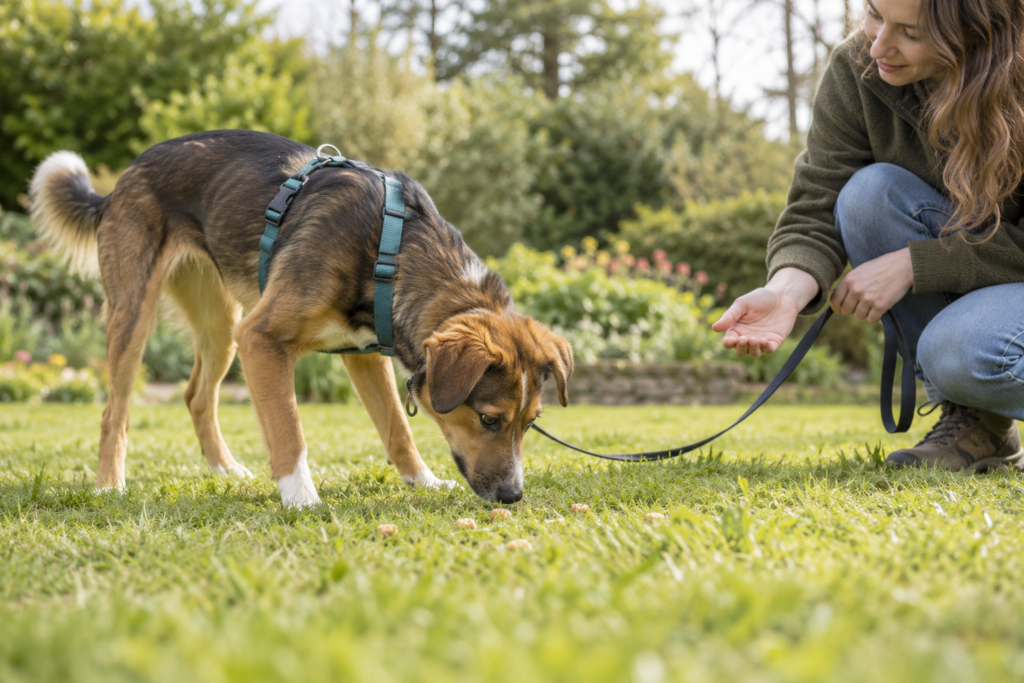
Your dog has not necessarily forgotten what they learned. Skills that worked in a quiet room may be much harder to use beside exciting smells, movement or other dogs. If your dog cannot respond, make the exercise easier: add distance from distractions, practise in a calmer place, and reward small steps towards the behaviour you are looking for.
Try not to think of this as stubbornness or a test of who is in charge. Dogs learn best when they feel safe enough to engage. Shouting or punishment can add worry and make it harder for them to focus on you.
Kind, practical ways to support your teenage dog
Make practice easier before making it longer
Keep sessions short and practise in places where your dog can still think. For recall, start close by and build up gradually. In open areas, a long line attached to a well-fitted harness can give your dog room to explore while helping you keep them safe. Follow local rules and supervise closely so the line does not become tangled.
If lead walking is one of your challenges, see our guide to kind, practical steps for walking on a loose lead.
Find rewards that matter to your dog
Food works well for many dogs, but it is not the only option. Your dog might enjoy a favourite toy, a short game, praise, a chance to sniff, or moving towards something they are curious about. Notice what your individual dog values and use it to make checking in with you worthwhile.
Give space for changing social preferences
Some adolescent dogs become less interested in greeting every dog they see; others feel uncertain in situations that used to seem easy. You do not need to encourage every interaction. Give your dog room, let them move away, and reward calm choices such as looking at a dog and then turning back to you. Walks can still be enjoyable without close greetings.
Balance activity with rest and choice
Exploration, sniffing, play and gentle training can all enrich your dog’s day. More intense exercise is not automatically the answer to extra energy. Make room for quiet time too, and watch how your dog responds so you can adjust the pace and setting to suit them.
When should I ask for extra help?
If a behaviour change is sudden, worrying, or comes with signs that your dog may be unwell or in pain, speak with your vet. If you are struggling with recall, reactivity, anxiety or day-to-day training, a kind, reward-based professional can help you make a plan that suits your dog and household. You do not have to wait until things feel unmanageable.
Need more help? Find a trainer
Tell us where you are and what you need support with. Use our Find A Dog Trainer / Behaviourist tool to explore suitable independent professionals in the Ethical Dog Trainers Network.
Further reading
