What Do Dog Trainer & Behaviourist Qualifications Mean?
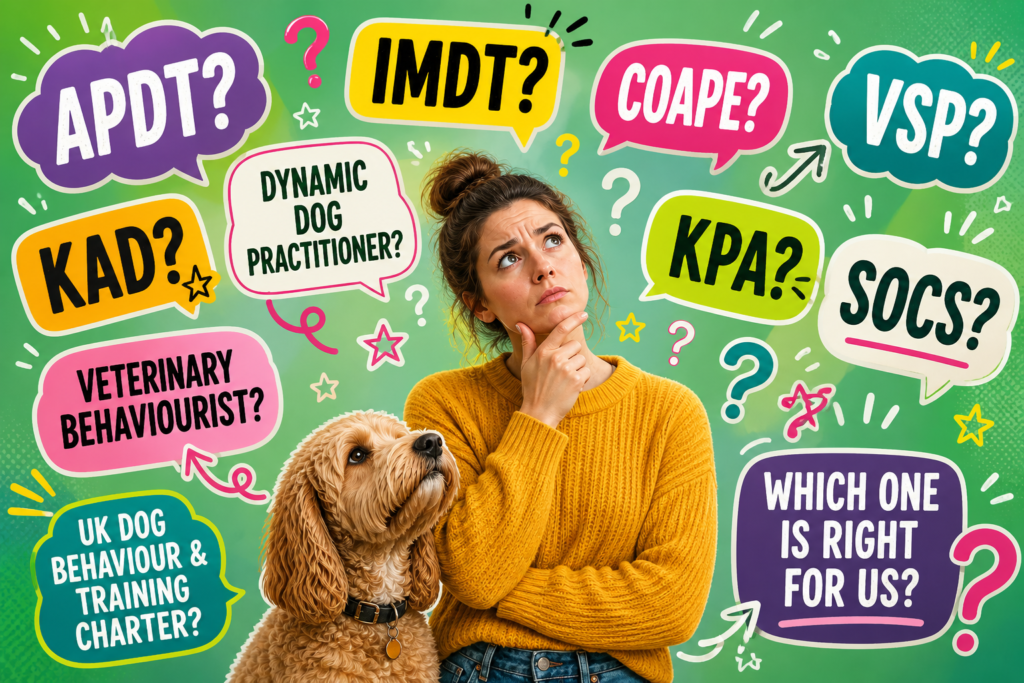
You may notice that many independent EDTN members have letters after their name, such as IMDT, APDT, ABTC or qualifications relating to animal behaviour.
These may show that they belong to a recognised organisation or have completed professional education in dog training, behaviour or a related field.
Here’s a simple guide to what some of those qualifications, memberships and professional designations mean.

UK Dog Behaviour and Training Charter
A UK-wide initiative that promotes high standards in dog training and behaviour.
- Brings together organisations committed to kind, ethical and evidence-based training
- Focuses on improving welfare and professional standards across the industry
- Supports the use of humane, science-led training methods
Professionals who align with the Charter are committed to putting dog welfare first and using ethical, reward-based approaches.

Institute of Modern Dog Trainers
A well-known UK organisation that focuses on kind, reward-based training.
- Trainers are assessed on both their knowledge and practical skills
- Ongoing learning and development is required
- Large and respected network across the UK
IMDT membership is a strong indicator of a trainer using modern, ethical methods.

Association of Pet Dog Trainers (UK)
One of the longest-standing dog training organisations in the UK.
- Trainers must pass a thorough assessment process
- Focus on positive, science-based training
- Members must follow a professional code of practice
Animal Behaviour and Training Council
A UK organisation that sets professional standards for trainers and behaviourists.
- Recognises trainers and behaviour professionals who meet specific criteria
- Promotes humane, evidence-based training
- Works alongside other organisations
ABTC acts as a register of recognised professionals rather than a training provider.

Pet Professional Guild
An international organisation promoting force-free training methods.
- Strong focus on ethical, non-aversive training
- Science-based approach
- Encourages ongoing education

Centre of Applied Pet Ethology
An organisation that provides education in pet behaviour and training.
- Offers courses focused on understanding animal behaviour and emotional wellbeing
- Often linked with behaviour-focused work and more complex cases
- Many students go on to work as behaviourists or training professionals
COAPE qualifications indicate a strong focus on the science of behaviour and understanding why dogs behave the way they do.
Dynamic Dog Practitioner Programme
A Dynamic Dog Practitioner is a qualified canine professional trained to identify subtle signs of pain, discomfort or physical dysfunction in dogs.
- Assesses posture, movement and behaviour
- Looks for possible underlying physical causes behind training or behaviour concerns
- Provides detailed reports to veterinarians to support further investigation, diagnosis and treatment
This qualification highlights the important link between physical wellbeing and behaviour, helping ensure dogs receive the right support rather than behaviour being looked at in isolation.

Victoria Stilwell Positively Dog Training (VSPDT)
An international training programme founded by Victoria Stilwell, focusing on kind, reward-based methods.
- Emphasises positive reinforcement and humane training
- Trainers are assessed on both practical skills and knowledge
- Strong focus on welfare, ethics and the human–dog relationship
VSP trainers are committed to force-free, compassionate training approaches.

School of Canine Science
An education provider offering in-depth courses based on the science of how dogs learn.
- Focus on behaviour, learning theory and evidence-based training
- Courses range from beginner to advanced levels
- Encourages ongoing learning and critical thinking
SOCS qualifications highlight a strong understanding of the science behind dog training and behaviour.
Karen Pryor Academy
An internationally recognised training academy specialising in clicker training and positive reinforcement.
- Strong foundation in learning theory and behaviour science
- Practical, hands-on training skills
- Globally respected within the positive training community
KPA certification demonstrates a high standard of skill in reward-based, science-led training.

Kids Around Dogs
A specialist programme focused on promoting safe and positive interactions between children and dogs.
- Educates families on how to build safe relationships between children and dogs
- Focus on prevention of bites and misunderstandings
- Trainers are taught how to support both dogs and families in real-life situations
KAD training highlights a trainer’s knowledge in keeping both children and dogs safe while building positive, respectful relationships.
Veterinary Behaviourist
(e.g. BVetMed, MRCVS, CCAB)
A Veterinary Behaviourist is a fully qualified veterinarian who has undertaken additional training in animal behaviour.
- Medically trained and able to rule out or treat underlying health issues
- Works with more complex or severe behaviour cases
- Can prescribe medication where appropriate alongside behaviour modification
- Often works alongside dog trainers to support long-term outcomes
This qualification highlights a high level of expertise, particularly where behaviour may be linked to pain, anxiety or medical conditions.
Other Qualifications
You may also see EDTN members with additional qualifications such as:
- Level 3 Dog Training and Behaviour qualifications
- Degrees in Animal Behaviour or Animal Welfare
- Specialist training in areas such as puppies, reactivity or behaviour
These qualifications may demonstrate further knowledge and experience in specific areas of dog training, behaviour, welfare or canine care.
Our Approach
Our independent EDTN members are carefully selected for their commitment to:
- Kind, ethical training methods
- Ongoing education
- High professional standards
Still Not Sure?
With so many different qualifications, memberships and organisations, it can feel overwhelming trying to work out whether you need a dog trainer, behaviourist or another canine professional. Every dog and every situation is different, and knowing who to trust isn’t always easy. That’s exactly why we’re here. We take the time to understand your needs and help you find an EDTN member who is the right fit for both you and your dog—giving you confidence, clarity and support from the very start.